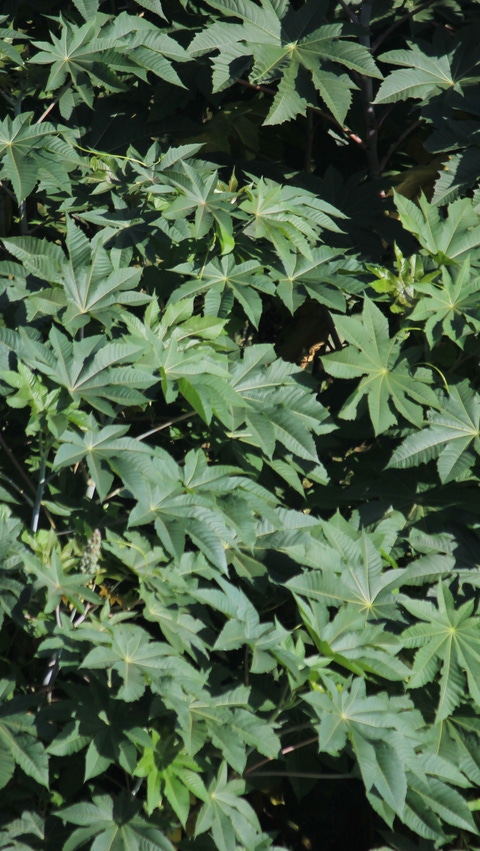
Sustainable castor oil
Castor oil is used in a variety of industries, including the cosmetics sector. About 87% of the world’s castor seeds are produced in India*. The castor plant has sustainable qualities: it is drought resistant and does not compete with the food chain for human or animal consumption. It is also an important and profitable crop for farmers, offering several advantages: it thrives on marginal soils, yields a substantial crop, and is easy to store and sell due to its long shelf life.
* FAOSTAT (2024)
Project Pragati
To address the social and environmental risks of castor cultivation, BASF has teamed up with Arkema, Jayant Agro-Organics Ltd. and the international civil society organization Solidaridad and launched the Pragati project back in 2016.
SOCIAL RISKS
- Risk of child labor
- Insufficient labor and living standards
- Financial issues
ENVIRONMENTAL RISKS
- Limited knowledge of best farming practices, soil protection and crop rotation
- Threat to biodiversity
- Weather changes can cause yield instability
HEALTH RISKS
- Physical problems caused by field work
- Toxicity risk of castor seeds (contains ricin)
- Limited access to health care
SAFETY RISKS
- Lack of personal protective equipment
- Limited knowledge of safe and appropriate use of fertilizers and crop protection products
Objectives
OBJECTIVE 1
Development of sustainability principles for the sourcing of castor seeds that will enable castor producers to offer certified sustainable castor to the global market.
OBJECTIVE 2
To improve the productivity and sustainability of the castor supply chain in India, particularly in Gujarat, thereby enhancing the economic self-sufficiency and livelihoods of smallholder farmers.
Focussing on
- Using good agricultural practices to increase yields and farmer incomes
- Using water resources efficiently and maintaining soil fertility
- Promoting the adoption of good waste management practices
- Enabling better health and safety practices
Third phase of Pragati project
The Pragati program is now in its third phase (2023–2026), with an expanded focus on supporting and increasing women’s participation in castor farming. In the 2024–2025 season, the initiative trained more than 1,150 women farmers, emphasizing good agricultural practices and financial planning to bolster their roles in farm management, financial resilience, and community leadership. Through structured training, exposure visits, and access to information on government welfare schemes, Pragati empowers women farmers as active decision-makers within the castor value chain.

SuCCESS Certification for castor supply chain
BASF and its partners, who jointly advanced sustainable castor farming in India through project Pragati, were also the founding members of the Sustainable Castor Association (SCA). The SCA is a not‑for‑profit organization that brings together all stakeholders in the castor value chain—including industry, civil society, and environmental and social NGOs—to develop and implement the SuCCESS Code.
SuCCESS, which stands for Sustainable Castor Caring for Environment & Social Standards, is regarded as the first independently auditable standard for sustainable castor production. It is designed to address key social, environmental, and economic challenges. The Code is structured around eleven principles of sustainable castor production, covering social and environmental aspects, as well as good agricultural practices. It encompasses workers’ welfare and protection, waste and pollution management; biodiversity, soil and water management, ecological balance, safe use of crop protection products and others.
Accountability at farm level is ensured through a rigorous verification system. The SuCCESS Standard requires adherence to 41 mandatory and 35 non‑mandatory control points, all specifically tailored to the needs and realities of castor farmers.
BASF has demonstrated a strong commitment to the SuCCESS code by certifying three production sites, becoming the first chemical company to achieve SuCCESS certification in 2022.
Following certification, BASF began supplying SuCCESS‑certified ingredients to the Personal Care industry.
As a result of the efforts within the Pragati program and the establishment of the SuCCESS certification standard, we offer a portfolio of ingredients based on sustainably sourced and certified castor feedstock.
Our product range includes established solutions such as Eumulgin® CO 40, Eumulgin® 410, Eumulgin® 455, Eumulgin® 60, which are widely used as solubilizers, as well as the emollient Cetiol® Softfeel, providing a light, smooth skin feel and improved spreadability without leaving a heavy or greasy residue. In addition, Cetiol Softfeel contains palm kernel oil, which is sourced according to the RSPO certification standard.
At BASF, we translate sustainable castor oil sourced according to the SuCCESS standard, addressing defined environmental, social and safety criteria, into high-quality ingredients. These ingredients combine proven performance with enhanced transparency and sustainability, thereby supporting our customers in meeting consumer expectations while mitigating environmental and social risks along the value chain.
Key Outcome
>140,000
tons of certified castor seeds have been cultivated since the beginning of the project
3
BASF production sites are certified according to the SuCCESS code
>150
medical camps have been organized
>10,000
farmers have been certified
>12,000
hectares have been farmed in accordance with the SuCCESS code
Year 9 yield is 32% higher
than the government estimates for the entire state
>10,000
personal protective equipment (PPE) kits were distributed free of charge
30% reduction
in on-farm water use recorded compared to conventional cultivation, through adoption of efficient irrigation practices.
This season,
more than 450 capacity-building training sessions
were held with farmers.
Over 500 lead farmers
have been trained to strengthen peer-to-peer learning.